
Table of contents
Maps have never been more powerful, and yet many frequent flyers will tell you the same thing after a few years on the road: the route you draw at home rarely survives first contact with reality. In 2026, with overcrowded hubs, climate-driven disruptions, and cities juggling overtourism policies, planning has become less about finding the shortest path and more about building a trip that can bend without breaking. The best lessons, seasoned travelers say, come from the mistakes they made when they thought logistics were the easy part.
Optimized routes fail at the first delay
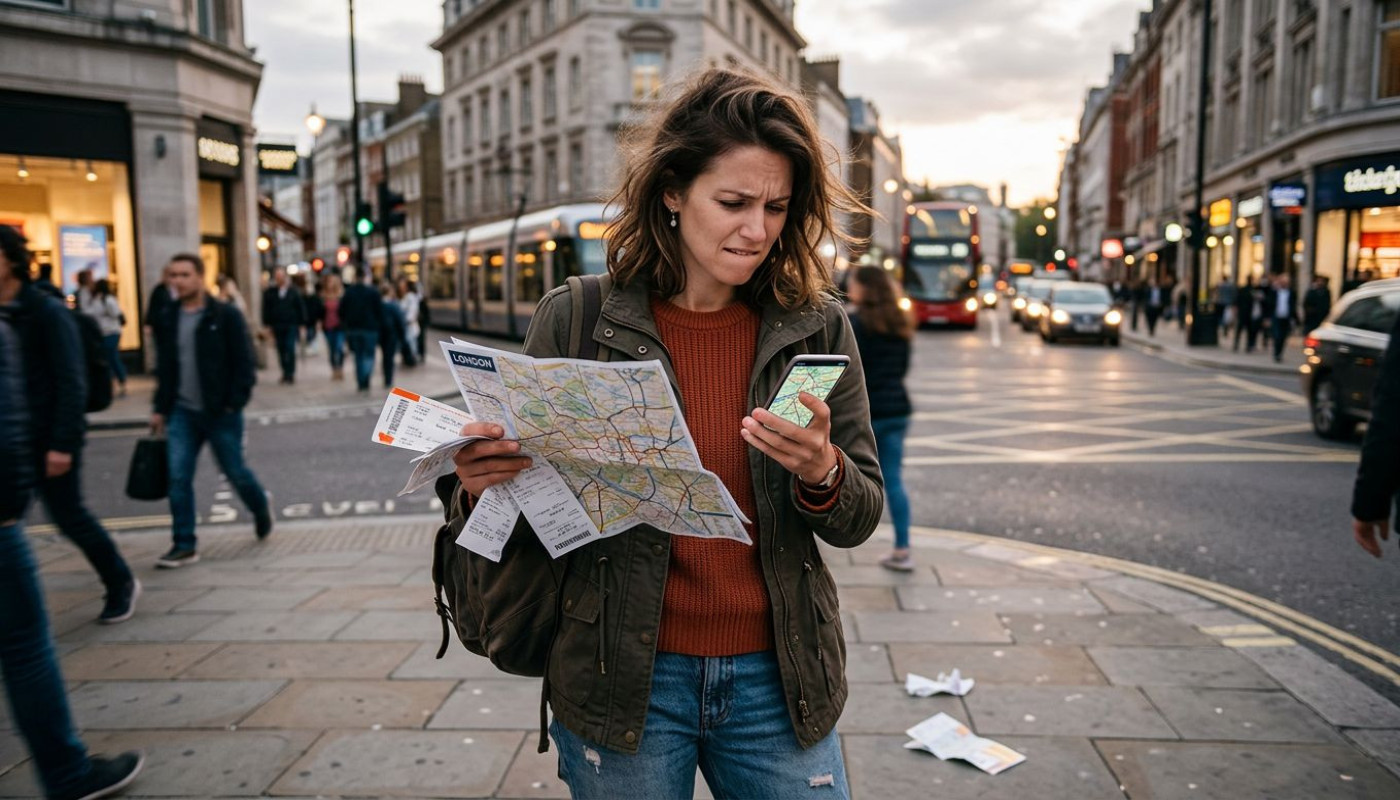
What breaks most itineraries? Not ambition, but fragility. The classic rookie move is to stack connections, timed entries, and “just enough” transfer windows until the whole trip depends on a single flight landing on schedule, and airports are not operating in that kind of world anymore. Across Europe and North America, recent summers have combined intense demand with capacity constraints, and the data show how quickly a domino can fall: in the EU, around one in three flights arrived late in 2023, according to Eurocontrol performance reporting, and while 2024 brought improvements on several corridors, punctuality still swings sharply during peak weeks. In the U.S., Bureau of Transportation Statistics data regularly place on-time arrival performance in a range where “mostly fine” still means millions of passengers absorbed into missed connections and rebookings.
The seasoned fix is not to panic-plan, but to design for failure, and that starts with time. Tight connections look efficient on a screen, yet they often turn into expensive stress when a queue or a gate change adds ten minutes, and ten minutes is exactly what you did not have. Frequent travelers increasingly apply an “elasticity rule”: add buffer where the system is weakest, typically on first arrivals, border crossings, and any rail-air handoff. The smartest routing question becomes brutally simple: if this segment goes wrong, what is my recovery path? That can mean choosing an earlier inbound flight, booking a refundable train, or sleeping near the departure airport when the first leg is a long-haul. It also means treating the first day as operational, not aspirational, and saving the must-do experiences for day two, when you are not at the mercy of a baggage belt.
Another underused tactic is to separate “movement days” from “story days”. Travelers who map routes like production schedules often forget that every transfer costs attention, and attention is a finite resource. A two-hour rail ride can be restorative when it is the only task of the afternoon, but it becomes draining when it is chained to check-in windows and timed museum slots, and fatigue is the silent force that makes good plans feel like bad decisions. Experienced travelers map routes around energy, not just geography, and the payoff is measurable: fewer last-minute taxis, fewer missed reservations, and fewer expensive “fixes” that appear, one by one, when the itinerary has no slack.
Overtourism has changed the rules
Here is the uncomfortable truth many repeat visitors wish they had learned earlier: the city you remember is not always the city you are arriving in. From Amsterdam to Barcelona and Venice, local authorities have tightened rules and nudged visitor flows, often through limits on short-term rentals, restrictions on group sizes in sensitive areas, and stronger enforcement of nuisance policies, and these changes can reshape your route in ways Google Maps will not explain. Amsterdam, for example, has been vocal about managing party tourism, and the Netherlands has debated aviation growth constraints as residents push back on noise and emissions. That does not mean “don’t go”; it means the friction points have moved, and travelers need to plan with civic reality in mind.
Practical consequences show up quickly. Hotel supply can tighten as regulations shift, and prices follow; last-minute “we’ll figure it out” routing becomes a gamble in high-demand weekends, and it is not just about money. Some neighborhoods become less welcoming to big groups, some attractions push timed-entry systems harder, and some transit corridors get congested at predictable hours, and if your route assumes spontaneity in the most saturated zones, you may end up spending prime hours in lines. Veteran travelers adapt by diversifying: they keep a core list of headline sights, but they also build in alternate districts, smaller venues, and daylight hours that avoid the crush, and they understand that “off-peak” is now a strategy, not a season.
The other lesson is about how you arrive. A route that funnels you straight into the most pressured central areas can feel like stepping onto a moving walkway you cannot exit. Seasoned visitors often choose entry points that ease them into a city, for instance starting with a quieter museum morning, a canal-side walk away from the main arteries, or a guided experience that provides context before consumption. In cities where crowd control is part of the landscape, local expertise becomes a routing tool; knowing which bridge is jammed at 16:30, which market is best on a weekday, or which tram line is faster than a taxi in rain, those details can rescue a day. For travelers building an Amsterdam route in particular, curated local options such as https://www.amsterdam-spirit.com/ can help translate the city’s rhythms into an itinerary that feels fluid rather than forced.
Money leaks in small, predictable ways
The surprise bill rarely comes from the big-ticket item you saw coming; it comes from a series of “minor” choices that your route quietly encourages. Every extra transfer is another chance to buy a convenience meal, to pay for luggage storage, to take a taxi because the connection is tight, and those costs are invisible when you are plotting lines on a map. Industry-wide inflation over the last few years has only sharpened the effect, and travelers feel it most in destinations with heavy demand pressure, where dynamic pricing is the norm. A museum ticket that rises with peak slots, a hotel that jumps because a conference came to town, a rail fare that doubles close to departure, these are not anomalies anymore; they are the pricing logic of modern travel.
Experienced travelers, especially those who travel often for work and fold leisure around it, build budgets around categories the first-timers ignore. They price the “edges” of the day: airport transfers, breakfast, late-night snacks, and the last-mile ride when transit thins out, and then they ask whether the route is creating unnecessary edges. The fix is not always to spend less; it is to spend with intention. Staying one extra night in a single base can reduce transport costs enough to justify a better hotel, and it can also reduce the cognitive load that pushes you into pricey mistakes. Similarly, choosing a rail segment with a reserved seat can look like a premium until you compare it with the cost of missing the cheaper train and buying a new ticket at the station.
There is also a data-driven rule of thumb many veterans use: the more complex the route, the more you should protect the expensive parts. That can mean fare classes with changeability, travel insurance that covers missed connections and medical issues, and credit card protections that are actually read and understood. The key is to match protection to risk, and risk is often concentrated in the first and last 24 hours, when delays have the most cascading impact. People who travel a lot are not necessarily more cautious; they are simply more realistic about how often things go wrong, and they have seen, in euros and hours, what it costs when you do not buy flexibility upfront.
The best routes leave room for discovery
Ask frequent travelers what they regret most, and you will hear a theme that has nothing to do with airports: they planned the highlights, but they did not plan for serendipity. The paradox is that mapping routes too tightly can reduce the very thing travel is supposed to deliver, the unscheduled afternoon that becomes the memory. Yet spontaneity is not the absence of planning; it is the presence of space. Seasoned travelers often design “open blocks” the way editors leave white space on a page, because without it the story becomes unreadable, and a trip can feel the same. They also map by neighborhoods rather than by attractions, because clustering experiences reduces transit time and increases the chance that you stumble into something unlisted, a pop-up exhibit, a small bakery, a street performance that exists only that day.
Another veteran move is to treat weather as a routing variable, not a footnote. Heat waves, heavy rain, and strong winds are no longer rare inconveniences in many regions; they can dictate whether a walking-heavy plan is joyful or punishing. Travelers who have been burned by this build parallel tracks: an outdoor-first route and an indoor-first route, and they decide the night before. The payoff is not only comfort; it is efficiency. When a city is drenched, everyone rushes to the same indoor attractions, and timed-entry slots vanish, but if your route already includes alternative indoor stops, you do not lose a day to scarcity.
Finally, there is a social dimension to route-making that first-timers miss. Not every hour should be optimized for “value”; some should be optimized for conversation, rest, and the simple act of being somewhere without extracting it. Repeat travelers plan meals the way they plan museums, not because dining is a checklist, but because sitting down at the right time in the right place can reset an entire day. They also embrace fewer bases, longer stays, and slower arcs through regions, and the data support the intuition: fewer check-ins mean fewer administrative moments, fewer lost items, and fewer frantic sprints, and those are precisely the moments that make a trip feel like work.
Before you book, do these three things
Reserve the fragile pieces first: long-haul flights, headline museums, and any limited-capacity experiences, then build the route around them with buffers you will actually keep. Set a realistic daily budget that includes transfers, meals, and contingencies, and if costs climb, cut legs, not sleep. Check whether local passes or regional rail cards make sense for your pattern, and look up any city-level rules that affect where you stay.
Similar

Curious Routes: How Unexpected Detours Can Redefine Your Travel Itinerary
Surprising Mistakes Travelers Make When Planning Their Routes